Inquiring the promotion of the MDGs in Romania. A discussion with FOND

FOND-logoSince 2007, the Romanian NDGD platform (FOND) is actively involved in increasing the capacity of member civil society organizations in implementing, advocating and monitoring projects and programs in the field of international development and humanitarian aid. As a major actor in the field, a strategic partner of the Romanian Ministry of Foreign Affairs, FOND has contributed to the promotion of MDGs and enhanced the role of Romania as a new ODA donor country at a local and regional level.

Interviewing Ms Adela Rusu, the Coordinator of the FOND platform, the Romanian NDGO platform which offers support to NGO’s working and/or willing to implement projects in the fields of development and cooperation.

Alexandra: Adela, what was the role of FOND in promoting the MDGs at national level? Could you summarize the main activities in this regard and sum up their impact?

Adela: The Romanian NGDO Platform, which currently has 36 NGOs active in development cooperation, development education and humanitarian aid, has as main role representing its members and very importantly, acts as a support center. It provides the members (for their projects and activities) relevant information and policy briefs on the global agenda, for example on issues such as development effectiveness and the Millennium Development Goals, and more recently on the post-2015 agenda.  More specifically, the platform was involved in awareness raising campaign promoting the Global Call for Action against Poverty’ campaign “Stand Up and Take Action” (2008-2009), focused on achieving MDG1 on extreme poverty and supported different campaigns on MGDs implemented by members in recent years. Recently, the platform has taken the role of facilitating national debates on the MDGs agenda by organizing since 2010 an annual event for the national development RO_dev_campcommunity – The Romanian Development Camp, with support from the Romanian Ministry of Foreign Affairs (as national coordinator of development cooperation) and UNDP – Bratislava Regional Center. The last edition of RDC hosted a debate on the new post-2015 agenda and provided input from the participants for the national position on this important issue.

So, FOND has been mostly involved in raising awareness and facilitating debates on the MDGs and post-2015 agenda, which is very much needed in the Romanian context as development cooperation is not very visible in the public space.

 Alexandra: One of the main objectives of FOND is the maintenance of an active implication of the Romanian CS organizations in the field of international development and humanitarian aid. How does FOND seek to stimulate the activity of Romanian NGOs in the field, and the coherence and efficiency of their efforts?  How does FOND connect its members to European and global debates in this field and support their active engagement in global discussions?

Adela: Besides the activities mentioned previously, FOND provides capacity consolidation tailor-made for the needs of the members by organizing trainings and workshops (project proposal writing, advocacy, campaigning, different policy issues: Policy Coherence for Development, the new multiannual EU budget and its effects for the NGDO sector, European Year for Development, Sustainable Development Goals …) and facilitating the Working Groups of the platform (Policy/Advocacy, Development Education, Humanitarian Aid) by fostering sharing lessons learnt and good practices among the members. For instance, in November we organized a workshop on effective campaigning tools relevant for the Romanian context, as to better prepare the members who will be engaged in promoting the European Year for Development (which will be celebrated in 2015).

FOND connects its members with the regional and international context in two ways: It provides a diresigla black sea ngo forum_smallct connection with potential partners from Romania’s ODA priority countries, by organizing NGO events to support networking, study visits and project writing, such as: The Black Sea NGO Forum (organized since 2008), The Romania-R. Moldova NGO Forum (2010, 2011) which later developed in the Mobility Fund for Experts from Romania and R. Moldova (2013, 2014). This year’s edition of the Black Sea NGO Forum will take place in early December (8-10) in Kiev.

In addition, FOND is an active member of The European Confederation of NGOs in Development and Relief (CONCORD) and the International Forum of National NGOs Platform, as well as a partner in two European projects with other similar platforms from the European Union. More recently, FOND has been engaged with the Beyond 2015 campaign by taking part in the European Task Force of this initiative. These connections provide the members with updated and digested information on the development debates at the European and global level and networking opportunities (identifying partners, resource persons, relevant good practices…) and also the opportunity to promote the members’ interest and priorities at the European level. It brings visibility to FOND and its members. Since this year, FOND even has a representative elected in CONCORD Board.

Alexandra: What could be the contribution of the Romanian NGOs in the overall debate that will lead to the new international development agenda?

Adela: The Romanian NGOs provide relevant input on what the priorities should be for the new agenda, based on their experience of promoting the MGDs and on the needs of the beneficiaries of their projects. Their contribution has been emphasized during the last edition of the Romanian Camp VII (which I have already mentioned above) and also is being used as valuable input for the debates at the regional level through our involvement in CONCORD (Beyond 2015 – European Task Force).

Alexandra: What kind of new synergies, partnerships and policies do you envisage for FOND in the near future in order to address the new SDGs both at national and regional level?

Adela: FOND will continue strengthening its current partnerships at national level (with the Romanian Ministry of Foreign Affairs and other relevant national stakeholders, such as the Parliament) and at European level (CONCORD and the European institutions, especially the European Parliament). At the international level, we’re exploring the opportunity to promote again global campaigns such as Action/2015, initiated by the Global Call to Action against Poverty (GCAP). And of course, we are open to other partnership proposals from other NGOs or different actors interested in this issue.


Teach for all, Teach for Romania

Primary education for all children is crucially important in order to help them get off to the right start. A basic need and right for all children around a world enshrined as Millennium Development Goal no. 2, education is a multi-faceted issue that speaks about numerous challenges, problems and opportunities, different needs, different approaches and asks for an ongoing, accelerated and updated response both globally and locally.

It isteach for all already well-known that the country where a child is born determines the kind of education he or she will receive and, moreover, it influences their future professional endeavors and options in life. On average across countries, a child coming from Sub-Saharan African countries is less likely to complete primary school than a child from Western Europe. However, in many countries with high primary completion rates, large numbers of school dropouts or out-of-school youth need our attention too.

Teach for all is an international movement that already exists in 36 countries and should be implemented in numerous other rich and poor countries that face both different and similar education-related problems. Quality education is needed everywhere, from New-York to Mumbay and Săcele, and other small cities and villages in Romania where educators from Teach for Romania (the Romanian branch of Teach for all) teach their pupils English, Arts and other subjects, and above everything, motivate them into finding out what future they want and why school is important in their endeavours.

According to the World Development Indicators, the Gross Enrollment Rate (GER) at the primary level in Romania reached 94.2 percent in 2012 (GER measures the total enrollment in primary education divided by the population size of primary-school-aged children, including here older persons attending primary school).  However, despite the fact that these numbers should make us optimistic about the situation of primary education in Romania, the 17.5 percent rate of school dropouts in Romania in 2013 also deserves warrant attention. In addition to this, it is worth mentioning that the first cause of school dropouts in Romania remains poverty.

While almost every school teacher in Romania dreams at working in comfortable and modern environments, teachers from Teach for Romania have committed themselves to the most troubled and less appreciated schools. The first generation of teachers (teachies) have been selected for a 2 years mandate to literally serve the nation. They left behind their fast-paced lives in corporations, offices and universities to go to small villages, impoverished cities and neighborhoods to teach, motivate, break stereotypes and perform a gradual change in the minds of pupils living on the edge of poverty. To be a teacher in Romania is neither very popular, nor financially attractive; therefore, being part of this program asks for motivation, strong leadership skills and enthusiasm. Moreover, teachers involved in the program should believe in the power of education and make a goal out of reducing education inequity in Romania.

Teach for Romania educators have been recruited based on a highly selective procedure and afterwards, they have been part of very demanding training sessions which prepared them for the school work in empoverished environments.

Fully integrated into the school team of their institutions, the 18 teachies just started their work in many schools all over Romania.

Interviewing Ms Corina Puiu, co-founder and Head of Training and Support at Teach for Romania, we found out that she gave up  an important position within Vodafone Romania (as the one leading the project ‘Vodafone Mobile Payments’) and put all her professional experience and personal motivation into the idea of bringing Teach for All in Romania.

Alexandra: Corina, how did Teach for Romania started in Romania?1899515_766282673382024_305279450_o

Corina: “Teach for all” is a global, but country-specific program that exists in 36 countries around the world, from the United States of America to India and Bulgaria.

In 2012, John (Ionut) Soleanicov  was back in Romania after graduating from Harvard Business School and Harvard Kennedy School of Government and living for many years abroad.

In Bulgaria, he met by chance Ms Evgenia Peeva, the founder of Teach for Bulgaria and realized that such an initiative should exist in Romania as well. At that time, I was in charge of Vodafone Mobile Payments within Vodafone Romania. When Ionut told me about the idea of Teach for Romania, this related a lot to my childhood back in Vaslui (where I was born) and Constanța (where I spent my childhood and my school years until university) and I committed myself to a project that, at that moment, was not sure to be approved by the Romanian Ministry of Education. Since then, we have been the co-founders of Teach for Romania. A couple of years ago, Bogdan Georgescu tried to implement it, but it was refused by the Romanian authorities at that time. However, in 2013, our plan was approved by the Ministry of Education and since then, we have concentrated all our efforts in having the first generation of teachers start their activity by September 2014. I believed in this idea from the beginning and now I am very excited about the way it grows and brings its first results.

10303297_813889701954654_4772087482914551033_nAlexandra: Can you offer us a general profile picture of the ones involved in Teach for Romania in terms of academic and professional experiences and personal motivation?

Corina: Surprisingly enough, we received 362 applications from individuals with different profiles willing to get involved in the 2-years mandate of teaching in troubled schools and environments in Romania. After interviews and group exercises, we selected 23 teachers and 18 of them already started their activity in several schools in Romania.  We were looking for highly motivated professionals, with a passion for education and willingness to challenge themselves working in primary schools in areas where teaching positions where not at all desired by other also very highly qualified teachers. The preparation sessions that took place during the Leadership Summer Academy (LSA), a couple of weeks before the start of the academic year, have been a test of endurance, patience and ability to face unusual school-related situations. LSA was conceived as the largest hub for leadership and pedagogy in Romania with 300 participants, including 200 children and around 100 trainers, facilitators and teachers. It was a first important step towards preparing our selected Teachers for Romania for their 2 years activity in schools.

The program started in September 2014 when 18 of our recruits were assigned in schools. They teach English, Romanian, Latin, Drawing and Arts, Mathematics and other subjects and try their best to meet the needs of their pupils. Therefore, they have the huge potential to bring tremendous influence on the lives of the children they work with every day for two years in a row.  And at the same time, this experience is completely transformational for them as well. They are not volunteers in the program and we support them financially through our scholarship program. Moreover, after the 2 years mandate, they become part of an alumni systemic-change network that looks quite promising already.

Alexandra: Can the idea of Teach for Romania bring innovation and change in the education system in Romania and open up new opportunities for the children involved in this project?

Corina: I would like to see the next generation of leaders of Romania coming from these children we have met while implementing Teach for Romania in rural and urban Romania.

Teach for Romania is part of the formal education system and we are committed to change and innovation. However, reality proves us that while students may be entering primary school, they are not always completing the cycle. And one of the first reasons why they abandon their studies is poverty. Thus, for the moment our hopes go to these children who are on the verge of leaving school with low credentials and qualifications and thus, with no future prospects. While we believe that a good start in life is highly dependent on education, they should also give credit to school and education in general. In low-income urban and rural areas, teachers’ efforts are going in this direction as well. According to 2012 PISA assessment, Romanian students are the less motivated ones from 65 countries involved in the research.

In these environments, motivation and willingness to fulfil studies and look for a better future are tremendously needed. Our aims for social justice and social efficiency go together with education quality. On the long term, we look forward to reducing education inequities that separate low-income students from their more privileged peers; moreover, we try to motivate teachers to bring not only knowledge, but also motivation and role-models in their classrooms. Moreover, while being a teacher in Romania is not a dream job, I hope that teaching for Romania is more than that.

In the US and other countries with a longer tradition in this program, it already exists a Teach for Alumni network that works very well there. Many of these Alumni decide to continue their teaching activities in low-income communities or go for other education-related positions. Step by step, they do not only understand the needs and problems of the system that have to be tackled at the moment, but they also look forward to bring change and innovation from their new positions. I hope that our generations of Teach for Romania professionals will form the network of leadership and advocacy that is very much needed in the education system.

Sabina Pop, 3rd grade teacher in Gârcini,   gave us her opinion regarding her experience as a  Teacher for Romania.

The reason why I joined Teach for Romania is that one of my values includes having an impact in the world I live in. In time, I realized that the only way to do so is by starting teaching and educating young people. I believe that education is the foundation of society and if we want to change generations, we have to help youngsters build inner confidence and facilitate learning experiences where they can realize how many life options they can have if they are motivated enough.

When I found out about Teach for Romania I knew, just by “scanning” the website, that I found the people who share the same vision I have for this beautiful country we live in and for our fellow citizens. I applied for the open position and, as they saw my motivation and determination, became a Teach for Romania teacher.

It is not easy at all. Teaching in Gârcini is the toughest experience I’ve ever been through. The reality struck me, even though we were prepared for it in the Leadership Summer Academy that took place just kilometers away, in Tarlungeni. The pupils I’m teaching are in the 3rd grade and 90% of them still have to learn the letters. Half of them are too old to be in the 3rd grade. They cannot do basic math problems, nor read or write. Their families are not supportive at all and they are all dependent on social supplements and monthly allowances.

Nevertheless, I am here (in Gârcini) because I do believe in them. I believe in the power of example and, most of all, in the power of a ‘healthy’ education – one in which the student is always encouraged to trust himself or herself, develop critical thinking skills, be curious about the world and motivated to learn more. I don’t have a lot of teaching experience myself, but I am learning a lot every day. I am trying to educate them, so they become motivated to be someone when they grow up – a person who has a well-paid job, who is satisfied with his/her famils life and who is always willing to give support to the people in the community where he or she lives in. This is my vision for my pupils and I put all the efforts to help them achieve their best.

My greatest achievement so far is the one related to the management of violence in my classroom. Children who exhibit violent or aggressive behavior at school are a great challenge for the school personnel. I used to have at least five or siex very violent students in my class who would always hit and spit each other. Since I never hit them, always encouraged them to reflect on their behavior and used the power of example, after only two months, I don’t have this problem anymore. I have to be honest and say that I am still surprised, but very happy we have come so far in such a short period of time. The same situation has occured during the Leadership Summer Academy; at that time, we had to deal with some noncompliant and violent behaviors exhibited by some pupils we worked with in Tarlungeni. We are still in touch with these kids and it is wonderful to see that they improved their behavior after we left their school.

In a nutshell, my  greatest objectives for this school year (2014/2015) concern improving my pupils’ reading and writing abilities. These are ambitious goals since we have to learn in one year what other students used to achieve in three years; however, I am confident that all the teaching methods and strategies I have learned during the Leadership Summer Academy together with my strong motivation to succeed in our project, will help us check out our accomplishments quite soon.


The official development assistance (ODA) in Romania. What’s in a word?

As one of the most important global players in the field of development with more than 160 country offices around the world, UNDP acknowledges the growing role of the middle income countries as emerging new donors. In the context of post-2015 agenda, the Busan conference (2011) highlighted the importance of South-South cooperation in the field of development and the increasing role of MICs, both as ODA recipients and donors.

In order to find out more on this topic, we interviewed Ms Anca Stoica who works for the UNDP Regional Center for Europe and Central Asia, serving as Romanian ODA Project Manager. 

Alexandra: The UNDP has been in Romania for over 40 years now. Anca, what are the main development areas in which the UNDP has played an important role in this country?

Anca: That is correct, the UNDP established a Country Office in Bucharest 42 years ago, in 1972, and it was actually the first UNDP office to function in a former Warsaw Pact state. That was nearly two decades before other offices opened in neighboring countries. After Romania’s 1989 Revolution, UNDP assumed a dynamic role as a partner of the Government and civil society. For over 25 years, it has identified gaps and areas of vulnerability in human development, it has demonstrated local solutions to these challenges, and has helped integrate strategies in government programmes.

From the beginning, the UNDP country programmes had focused on assisting Romania to establish national capacities in three core areas: strengthening democratic governance, reducing poverty and deepening social inclusion, and protecting the environment. Our main objective has been to align the country programmes to Romania’s national priorities linked to the Millennium Development Goals (MDGs) and EU integration, and at the same time to stay close to the UNDP corporate priorities of fighting poverty, protecting the environment and building democratic societies.

In fighting poverty and deepening social inclusion in Romania, for instance, the UNDP has implemented programmes that tackled the social inclusion of Roma citizens, the challenges faced by people with disabilities, young people leaving institutional care, women and other potentially disadvantaged groups. These measures have helped to address labor market imbalances, reduce the impact of economic downturn and build civic activism. To protect the environment, the UNDP has critically contributed to improvements in national laws, practices and strategies on issues concerning biodiversity conservation, climate change adaptation and energy efficiency. Cross-border measures have been geared towards expanding sub-regional cooperation in managing natural resources. Also, in deepening democratic governance, the UNDP has helped Romania to strengthen an independent and effective judicial and administrative system properly equipped for fighting corruption, so necessary for sound public finances and well rooted socio-economic development. It has also supported institutions like the Permanent Electoral Authority, to develop its capacities to organize independent, free and fair elections for Romania.

Alexandra: The UNDP has taken a leading role in local coordination efforts of advocacy, monitoring and implementation of MDGs. Taking into account your professional experience within the UNDP, can you describe UNDP’s role in supporting new ODA donors (such as Romania since its integration in the EU) in their efforts of tackling the MDGs? 

Anca: Interest in Official Development Assistance (ODA) has increased drastically over the last 15 years and this has been largely generated by the international attention towards the MDGs. The UN Millennium Declaration had explicitly recognized the role of ODA in the development process and stated that a substantial increase in ODA, among others, is greatly needed to achieve the MDGs. In this context, the United Nations Development Programme (UNDP) has a formal mandate to help turn into reality the “Global Partnership for Development Cooperation” agreed upon in Busan and the MDG 8. It also assumed a big role in promoting development cooperation between emerging donor countries and recipient countries and in strengthening the new ODA donors’ capacities to effectively deliver development assistance. Moreover, the UNDP is an important partner for and facilitator of transition experience sharing and South-South development cooperation, providing structures and frameworks for innovative partnerships such as triangular initiatives.

Alexandra: How would you evaluate the implication and support of UNDP Romania in strengthening the capacity of local NGOs in implementing ODA projects and programs?

Anca: Legislation shortcomings in Romania are preventing the MFA in granting ODA funds directly to civil society organizations. This is the main reason for which our organization had to step in and help the MFA channel the funds through the UNDP programme frameworks. However, this context has enabled us to strengthen the partnership and work with NGOs and to support their capacity building efforts along the way. We have involved NGO partners in most of the UNDP capacity building initiatives, we have boosted the use of results based management at a larger scale in Romania and we have used our UNDP network of country offices and regional centers to support and facilitate the Romanian NGOs’ transition experience sharing with civil society in our ODA partner countries.

Alexandra: Drawing from the UNDP’s experience in leveraging its core competencies for the achievement of MDGs, which are the lessons learnt for the international development agenda after 2015?

Anca: First of all, we should stress once more that the implementation of the MDGs is still fundamental, despite the significant progress that has been achieved so far. The MDGs have proven to be a very powerful instrument in creating a shared global vision and development framework to address poverty and advance human development. Nevertheless, their implementation has generated during the last 15 years important lessons for the international community. For instance, the MDGs did not really have a focus on good governance issues, thus failing to tackle important areas of development such as the fight against corruption and public service delivery which are important enablers of poverty reduction efforts. Also, the MDGs did not adequately address issues of social protection, inequalities and complexities related to demographic dynamics, peace and security and human rights. Nor did they consider the vulnerability to natural hazards or to other external socks which has caused setbacks in MDG achievements overall. But all these lessons seem to have been well learned by the international community that is now more committed than ever to fix remaining challenges within the new framework of the Sustainable Development Goals.

Anca Stoica, the Romanian ODA Project Manager, is responsible for the implementation of the New ODA Cooperation Partnership with Romania, providing overall technical support to the Romanian Ministry of Foreign Affairs in the development assistance project planning, implementation, monitoring and evaluation. Moreover, she provides partnership and project development services in view of supporting Romania’s South-South cooperation efforts and its contribution to the global development cooperation scene. Anca joined the UNDP in 2007, having previously worked for the UNDP Romania Country Office as a Programme Manager for the Democratic Governance Portfolio. In this position she has contributed to the build up and implementation of two UNDP Country Programmes in Romania by providing strategic advice, conducting analysis of the development situation, designing concept notes/projects and mobilizing financial resources for the successful delivery of developmental results. Anca’s experience in project management spans a diversity of thematic areas, from development cooperation and electoral assistance to public administration and rule of law. She holds a B.A in Political Science at the University of Bucharest and a Master Degree in Political Science and International Relations at the same university.


Discussing the UN Youth Delegates Program in Romania

images (3)One important form of youth participation at the UN level is through the UN Youth Delegates Program.

In Romania, it started back in 2006 when the first two UN Youth delegates have been selected to be part of negotiations and resolutions concerning youth and youth policies. Since then, every year, two representatives of Romania attend both the General Assembly and the Commission for Social Development, participate in intergovernmental discussions and meetings, conduct various research projects and are actively involved in numerous activities held by the Civil Society (CS) community in Romania and abroad, the Romanian Ministry of Foreign Affairs (MFA), the Ministry of Youth and Sports and the UN Information Center.

Interviewing Mr Dragoș PREDA, the initiator and co-organizer of many social, cultural and education projects, pro-actively involved in the civil society and public-private environment in Romania. Among his best known projects, we mention the ongoing Forum of Education, the Classic is Fantastic Gala, the Romanian book library in Turin and many others.10606268_720852077996374_1939530842228769685_n

Founder of CRREDAE, as well as of the Club for Romania, Dragoș stays very much attached to the project/ the organization (with which all began): the League of Romanian Students Abroad (Liga Studenților Români din Străinătate- LSRS).

For the second time returned to Romania after getting the French Government scholarship to the French National School of Administration (ENA) and graduating from  Paris 1 Pantheon-Sorbonne University (Master 2) , Dragoș has continued his activity in numerous civil society organizations, participating as co-organizer and/ or member of the jury of several events such as the UN Youth Delegate Programme in Romania, Education Awards Gala, Civil Society Gala, and many others.


Alexandra: How did the UN Youth Delegate program start in Romania back in 2006?

Dragoş: Of course, the roots of the programme can be found within the United Nations, where luckily, a Lady of the Romanian diplomacy, Her Excellency Simona Mirela MICULESCU, Ambassador of Romania to the United Nations, truly committed herself to this country, to its future (namely, to the youth), backing each step further with her hole energy.

But every story has different perspectives. Mine started during the second year of the UN Youth Delegate program, back in 2007. That year, I graduated from university in France and after getting my BA and MA degrees, I was looking to readapt to my home country. I found out about the program from a friend and I gave it a try.  Not too many people know this inner story:  I was not selected as I had no current involvement on the Romanian youth agenda and I was too recently returned from abroad to be the one representing the Romanian youth interests to the UN agora. Meantime, until 2009, I have been working for  the Romanian Ministry of National Defence.

But, hazard took me closer to this program on the 8th of January 2009 when, together with some friends, I started a dream project that soon became a reality:  The League of Romanian Students Abroad or LSRS . That dream gave me the opportunity to meet all the youth NGOs in Romania, among them, the Romanian Youth Council (CTR). At that time, CTR was trying to implement the program Un Youth Delegates in collaboration with the Romanian Ministry of Youth and Sports and the Ministry of Foreign Affairs. Back then, I had the pleasure to meet Mr. Octavian BELLU, the State Secretary for Sports at the Minister of Youth and Sports. Mr. BELLU took this program into consideration and put it on the discussions agenda with the Minister at that time, Ms RITZI.

In addition to this, it is worth to mention that the Ministry of Foreign Affairs was supporting and legitimating the program as well. I am thinking about the tremendous support for this program provided by  His Excellency, Ambassador Cosmin BOIANGIU, at that time Director General of the Direction for the United Nations; in a nutshell, after all these pieces have been put together,  the only one thing we had to do was to organize the new officially reinforced UN Youth Delegates program in Romania.

In 2014, I was appointed chief of staff of the Romanian Minister of Youth and Sports (Ms Gabriela SZABO), which I am still honored to be. This position gives me much more responsibility towards the program and towards my fellow colleagues from the civil society representing youth. While trying to improve it year by year, I thought about attaching it to the newly launched National Youth Strategy 2014 – 2020  (strategy built up by my colleagues from the Department of Youth, under the direction of Mr. Cristian COSMIN, Secretary of State for Youth and his team, with the entire help and expertise of Romanian UNICEF branch, under the direction of Ms Sandie BLANCHET).

Doing this, together with my fellow colleagues from the Direction of International Affairs, we sent protocols of collaboration to the Romanian Ministry of Foreign Affairs, as well as, for the first time, to UNICEF, OIF, in order to get them involved not only in the evaluation of the candidates,but also in building up their expertise through internships in these institutions.

Alexandra: The selection process for the program is organized by the Romanian National Youth Council and the Ministry of Foreign Affairs together with the Ministry of Youth and Sports. Who are the Romanian UN Youth Delegates? Can you provide us with a general profile picture of the delegates in terms of professional and academic qualifications and personal motivation?

Dragoş: The selection of the candidates, as well as the organization of the program is done by the Ministry of Youth and Sports, through the International Affairs Directorate. Currently, the Romanian National Youth Council is one of the observing members from the youth civil society.

The Romanian MFA plays an important role in the whole program, both from the expertise side providing support on the jury process, in teaching the UN Youth Delegates the UN ways of conduct, in providing know-how, and also in helping the delegates sur-place, logistically in New York, during the two sessions.

Of course, the Romanian Ministry of Foreign Affairs is one of the two main institutional stakeholders of the program.

Usually, the two UN Youth Delegates are a young lady and a young gentleman, based on equity between men and women. Moreover,  they might be pupils or students between 18 and 25 years old. Furthermore, they are responsible young citizens of their country, very much involved in the youth civil community with a good academic background and a serious and energizing experience in matters touching their generation, advocating for a comprehensive vision of our society.

Alexandra: How would you evaluate the quality of the applications received every year and afterwards, th10417789_659176164163966_7690185862805444599_ne overall activity of the UN youth delegates in Romania?
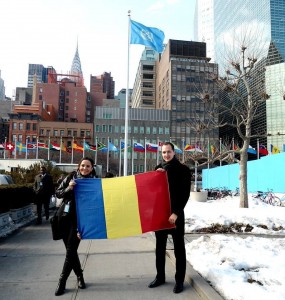
Dragoş: Every year, I noticed improvement in the program per se and the involvement of the UN youth delegates in numerous youth-related issues. I hereby want to thank the previous UN Youth delegates,Mr Cosmin CHIRITA and Ms Eliza CHIRILA for their impressive involvement in advocating this program all over Romania, in creating awareness of the necessity of youth part-taking in the process of drawing the future of our country. Through their actions (i.e. their caravan in the country which took place between the two UN General Assembly sessions), and afterwards, while connecting the dots and the youth hubs from Romania, they managed to foster the image of the program among young potential candidates to this program.

Alexandra:  In New-York, the selected delegates from all countries involved in the program deliver a statement and participate in informal negotiations and discussions concerning youth. What is the impact of their statements at a national level? Or in other words, how does the statement reflect the ongoing activities of the delegates through their mandates?

Dragoş: I think that the New York UN arena is the right place for creating a common language, understanding and vision for our youth representatives.

The main “battle” goes home: the “battle” of their generation. Their deeds are seen after their mandate, if they pursue their goals. They are an interesting link at multiple levels: between generations, between the more opened civil society strata and the rigid public bureaucratic system, between Romania and the entire world. They are the creators of a common understanding more than a simple agenda, they are the ones creating communication bridges between the above mentioned categories.

For the first time, during the UN General Assembly session, the newly elected delegates raised  the importance of sports in the development of the future generations; therefore, for the first time, the two sides of the Ministry were linked at the UN. They stood up for the importance of developing a preemptive health system, but also for creating a cohesion in the society and between cultures, a vehicle to end conflict, and rebuild countries. Last , but not least, sports create models to follow in the future. However, sports without youth don’t exist.

The Romanian youth start to mean something, to be heard out by the authorities, they start to build up awareness.

It takes time to change generations, but the first steps have been already taken. All it takes is to choose the best path and start walking on it.

Alexandra: It can be presumed that former UN youth delegates share common values and principles, professional objectives and interests. To what extent do former and current UN youth delegates act as a network? After finishing their mandates, do they enjoy a certain degree of influence on the wider public (political and civic level) promoting youth policies or questioning issues concerning youth?

Dragoş: For every generation of UN Youth delegates, further steps have been taken. Of course, an important element is each one’s character, their will, the drive they have, how wide is they comfort zone, how visionary is they determinacy.

For the moment, their community is not truly forged, I would say that they become more united only “against dangerous situations” when, for example, the quality of the program is concerned. The European education system does not create the truly alumni network we might expect, and even if they remain more or less attached to the network and to the program, life takes them to much more individualistic careers and less advocating and involvement. So their influence is very much linked to their personality and their interest in pursuing the mandate they had and less on a real community building vision.

Alexandra:  What are in your perspective the tools to enhance a better performance in terms of efficiency, activities and results of the program in Romania?

Dragoş: The best tool is the  will: the will of their generation, the drive of the delegate themselves to conquer each and every obstacle, to surpass their beliefs and the previous generations, the difficulties and inertia of the system.

The second element, after the will of each stakeholder, should be a better and more clear financing process of the program.When we think about the material resources, we should perceive them as moyens-en-soi and not as but-en-soi (fins). We are the aspiration of ourselves and of the future generations, not the artifacts we built-up for our needs.

Moreover, I’m thinking about  the importance of developing the network and create better connections between our delegates and various other programs, such as those developed by UNICEF, the UN Alliance of Civilizations chapter Romania, the MUNs (model of United Nations) programs, and UE Assembly simulations for youth.  We might also consider opening international relations, political, security and defense think-tanks agendas to youth. In a nutshell, it is tremendously important to connect the dots of our society!

Alexandra: What are the main priorities of the current mandate of the Romanian UN Youth Delegates? And to what extent do they enjoy institutional support from governmental and non-governmental bodies?

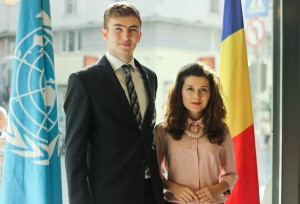
Dragoş: For the 2014 – 2015 mandate, the new delegates are Ms Bianca DRAGOMIR and Mr Luca CIUBOTARU, selected after the selection process IMG_1388conducted in August 2014. They have already conducted consultations with youth reprezentatives from Bucharest and other cities in Romania and organized various events on youth issues and campaigns to promote the values of the United Nations.
The aims of United Nations Youth Delegate program are:

  • To directly involve the Romanian young people on drawing the international policy agenda on youth;
  • To develop a sustainable society thru democratic values by facilitating youth participation on all decision-making levels;
  • To promote youth policies, policy coordination mechanisms among young Romanians at national level as well as the importance of youth programs as part of the socio-economic development;
  • To familiarize young people in Romania with global development issues and opportunities for involvement they have in this regard;
  • To support activities and youth initiatives in Romania.

The types of activities initiated by the two youth delegates include:

  • National activities aiming to increase awareness among young people in Romania on global issues and promote UN values;
  • Seminars/ trainings/ workshops on the topic of sustainable development in Romania in the context of globalization;
  • Debates/ conferences on UN specific topics;
  • Publication of articles/ organization of challenging debates on specific topics regarding youth issues at a global level.

The two delegates also participate in a series of activities in order to actively promote both locally and nation-wide the priorities and as the values of the United Nations Program. Thus, the youth delegates participate in a range of activities, such as conferences, debates, roundtables, youth events promoting active citizenship, volunteering, non-formal education, leadership, human rights; as well as seminars, trainings schools, thematic forums, youth summits etc. on sustainable development issues and constantly touching the role of Romania in the context of globalization.

At international level, Romania’s Youth Delegates in-office attend two intergovernmental conferences: the United Nations General Assembly (in October) and the Commission for Social Development (in February, the following year).

Nowadays, despite the fact that the program was very well promoted by our previous delegates, from my point of view,  we should struggle more in order to develop the UN Youth Delegate culture in Romania

Alexandra: How would you encourage young people to apply for this program? Do you have a message for those who might consider it in the future?

Dragoş: I will start by discouraging them! 🙂  First, they will have to challenge their will and ask themselves if they have what it takes: not only the knowledge, the skills, the aptitudes, not only the will, the drive, the energy to surpass any obstacles, challenge new experiences, taste new flavors of human understanding, jump in an almost unknown before world with a thirst to discover! Only after that they will truly be able to open up the  door to the wonderful and complex world of diplomacy! From that moment,  their life should be about the others, about building, developing, reveling new perspectives of human thriving.

*

Who are the UN Youth Delegates? In order to find out more about their profile, former and current activities, we discussed with several UN Youth Delegates who gave us their pespective over the program they have been part of for one year, back in the days.

(Reportage by Alexandra TIMOFTE)


For Ms Alexandra MARTIN, former UN Youth Delegate in 2008/2009, it was by far one of the most challenging, exciting and enriching period of my life until now. I was only 19 when I found myself living my dream, but also experiencing the world from a different perspective. Together with Bogdan Covaliu, we aimed to craft a mandate that would reconcile the national perspectives on youth, be they expressed by national governmental stakeholders, NGOs or individuals and bridge the gap between the diplomatic interplay and grass root realities. With a great suphotopport from H.E Simona Miculescu, the Romanian Permanent Representative of Romania to UN and her team based in New York, we managed to get our message across at the highest degree. We have worked together with the youth representatives from other countries to emphasize the importance of involving us, the youth, in the conversation and decision making process when it comes to our own future and development.

After finishing my mandate, I have been working in the Romanian Non-Governmental sector, in the field of education and human rights. In 2012, I have been deployed as a civilian expert, seconded by the Romanian Ministry of Foreign Affairs in Georgia. Initially, I served as a human security monitor and after as Operations Officer of the European Union Monitoring Mission, Field Office Zugdidi.

At this moment, I returned to academia, enrolled in a MA program at Johns Hopkins University, School of Advanced International Studies, specializing in International Economics and Conflict Management, with a particular focus on the transition from traditional peacekeeping to multidimensional operations in conflict affected areas.

Ms Alexandra NASTASE, now Policy Analyst at the World Bank, former UN Youth Delegate back in 2011/2012, the mandate as a United AN and BKMNations Youth Delegate represents a significant professional development opportunity, but goes beyond work and succeeds to influence you as a person. When you understand the type of responsibility that you have been given as the voice of your generation at the most important political forum, this becomes irreversibly a character-building experience. In more practical terms, for me, it meant the moment when I realized that I want to dedicate my career to serving the community, and this has been the main driving force in my professional life so far.
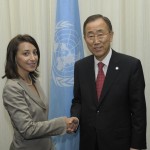
At national level, we worked with various stakeholders to define our mandate, in order to make sure that our appeal to all Member States represents the Romanian youth. Based on the consultations we held, we chose to focus on prioritization of investments in youth employment, encouragement of active citizenship and recognition of volunteerism as an instrument to acquire practical skills for integration in the labor market. Moreover, we organized several events in which we aimed to bring the UN values closer to the Romanian Youth or the Romanian experience closer to the other UN Youth Delegates or Permanent Representations of different Member States to he United Nations.

 Complementary to the representation and advocacy attributions, we also took an active role at the international level, working with youth-led organizations, Regional and National Youth Councils and the other United Nations Youth Delegates in order to advocate for the appointment of a Special Advisor to the Secretary General on Youth matters!