Migration – the buzzword of the moment

Migration-related words seem to have become the buzzwords of 2015 lexicon: about 60 million refugees worldwide, millions of economic migrants, almost 100 million people dependent on everyday humanitarian aid to survive, large-scale displacements in Ukraine, millions at risk of famine in South Sudan, 5 years of conflict in Syria, 1 year of ISIS, plenty of minorities slipping into oblivion. The picture looks gloomy at the moment and the phenomenon of migration is both academically and professionally challenging.

*

Alexandra: We are interviewing Irina Mihalcuţ, a young professional in international development with a strong background in migration policies.

_DSC2021

Irina, June 2014 ©StudioAlb


The concept of migration has a very special meaning for you. It can be translated through many stories and serendipitous moments that have marked your personal and professional path. With a Master Degree in Migration and European Affairs from Université Libre de Bruxelles (Belgium) and Babes-Bolyai University (Romania), your first professional experience with the phenomenon of migration was in Italy where you worked as a Cultural Mediator and Social and Legal counselor for a local immigration office. Before joining the team of UNCHR in Malta you have experienced the status of a foreign student in Belgium and the one of a migrant in Italy, Belgium and South Korea.


What first made you to choose migration as the core topic of your studies and then, of your profession?

Irina:  Yes, as you have mentioned already, the concept of migration has played a very important role in my life. When I was about 13 years old, I heard from my family about an uncle of my father who ran away from Communist Romania and became a refugee in France. He was a Catholic priest in a small village in the region of Moldova and he tried to oppose the Regime through different actions in his community. Of course, he was living with the constant fear of being stopped by the authorities but despite that he continued his work, mainly in awakening the community through his preaching. One day, the Securitatea was informed and of course they took him for questioning. I do not know all the details related to what exactly happened to him after, but apparently one day he just disappeared and nobody from the family saw him again. Only after the fall of the Communism, they found out that he became a refugee in France. There, apparently, continued to work as a priest until his death. Some years ago I actually have managed, by chance, to find a book written by him during his stay in France. It is really incredible to have found a copy of that book with his signature on it. It was a very emotional moment!

This family story was the starting point for me in getting interested in the topic of asylum and migration. It would have been great if during High School we had had some classes about migration. Not necessary as a separate subject, but somehow integrated in the curricula of another subject, like History or Social Sciences. That would have helped me understand earlier so many issues related to this phenomenon, which is part of the human history since its beginnings. Migration affects almost everybody’s lives in our current society and it is important to make people think from an earlier age about the consequences of migration, the effects of conflicts and what it means to be a refugee. Only like that we can diminish and, hopefully, even eliminate rampant racism, discrimination and xenophobia which are so much prevant in our societies these days. Only like that we can prevent the manipulation of the masses by media and politicians.

The second main reason why I became so much interested in the migration phenomenon is also a personal one. My mother has become an economic migrant in the late ’90s. She was “forced” to leave Romania by the economic situation in our town and her desire to make sure that I have a better future. She had to leave me alone while I was still in High School and that had a tremendous impact on the way I have perceived and led my life afterwards. Through her experience as a migrant I have learned about the many difficulties a foreigner can encounter while working and living abroad, I learned about the emotional costs that a migrant has to pay but, I also learned about the wonderful gifts that the world can offer to these courageous people. Yes, all persons who decide to leave their country for any reason, are very courageous people. Some have it easier than others, but for all of them the hearts will always long for something left back home: their family, a friend, a special place, a dish, a landscape, a feeling, a particular time in their youth etc.

The abovementioned reasons made me become interested in the topic of migration and determined me to become a migrant myself. Since September 2004, this life style has become my “full-time job”  when I started my Master Degree in Brussels and I think I will not stop being a nomad for quite some time from now on. You know what they say? Dust if you must, but the world’s out there/With the sun in your eyes, the wind in your hair,/A flutter of snow, a shower of rain,/This day will not come around again... as in Rose Millingan’s poem.

Alexandra:  In Italy you used to work with refugees and economic migrants seeking for a better life in Western Europe. What have been the common misconceptions about migration that you encountered in your work at the immigration office in Italy?

Irina:  Yes, I had the chance to work with refugees and economic migrants in Italy for some time in 2005 and in 2007. It was a very challenging experience for me, since I was still at the beginning of my professional career; nevertheless, during those times, I learned a lot about what I wanted to do in the future. And more than that, through interaction with colleagues from different teams I worked with I learnt how to balance emotions, reactions and actions, how to become a good professional in such a tough environment.

During those times, I understood that there are three types of professionals working in the migration and asylum environments: 1) the pastoral ones – these are the ones who give everything to the people they are working for; they do not separate their personal lives from the work life; they do not have the strength to say “no” when is needed; they are the ones who are ready to listen to the life story of a person for the tenth time at three o’clock in the morning; 2) the technical onesthese are the ones who do not shed a tear when they hear a horrific story form a war situation; they are the ones who will stop the interview with five minutes before the end of their working office hours and, even if that moment might be crucial for the status determination of that case, they do not care; 3) the techno-pastoral onesthese are the ones that can show compassion, but who can also say when needed now it’s enough! Take your life in your hands and start living again, do not expect the system to do it for you!; they are the ones who separate their personal lives from the work life but who can say Hi! How is your family? How were things for you lately? whenever they meet a migrant/refugee on the street.

In my opinion, the first two types are often met in the migrant/refugee contexts (including in the Italian Immigration Office where I worked) and are very dangerous. The professionals falling in the first category create most of the time an emotional dependency for their clients and the ones found in the second category provoke fear and inhibition in the hearts and minds of the migrants/refugees with whom they deal with. These two categories of professionals contribute a lot to the failure of the projects and programmes they try to implement and they fuel very much the misconceptions about what migration and asylum seeking means. On one side, the migrants/refugees either believe that their lives are in the “hands” of the system or they just avoid telling the truth because they fear the system (depending on what type of professionals they deal with). On the other side, these failed projects and programmes are used by media to create sensational news, by politicians to create “catchy” propaganda slogans and by hosting communities to blame foreigners for their socio-economic problems.

From my point of view, the third category of professionals – the techno-pastoral ones – are the best. They are the ones giving the emotional comfort needed so much by the migrants and refugees, laying the foundation for trust and truth and for successful personal stories, but in the same time they are the ones ready to tell at the right moment that is time for the migrants/refugees to take their lives in their hands and not to behave constantly as vulnerable and victims.

I have mentioned these categories of professionals working in migration and refugee contexts because I believe they are very often the main responsible for the existence of many misconceptions about migration and the way they act influences a lot how migration and asylum seeking are perceived by everybody.

DSC_0072

Irina Mihalcut (in the middle) with her colleagues at UNCHR, World Refugee Day (2011)

Alexandra: Working with UNCHR in Malta (2009 – 2012) while the new office was opening in Valletta was definitely a great professional challenge. What were your main tasks and how did a day-to-day work look for you? What gave you most job satisfaction? 

Irina:  Yes, you are right. It was a very challenging professional experience working with UNHCR in Malta while the new national office was established. The Country Agreement between UNHCR and the Government of Malta was just signed when I arrived in the archipelago (the summer of 2009) and the initial steps for the set-up of the office had to be finalized by the end of the same year. I started my employment with UNHCR sometimes in November, mainly due to bureaucratic delays related to a slow national process for getting the work permit in Malta. Yes, I was again experiencing on my own skin what it meant to be a migrant.

I have been hired to assist the Country Representative in all aspects related to the set-up of the new office. My tasks were very technical at the beginning and mainly related to logistics, procurement, administration, human resources, IT and finance. I have received an empty building, that required a lot of repairs and improvements, and my task was to make that place a functional office. In the first months, a “normal” day at the office meant long hours of technical work and learning. I was new in Malta and in the same time it was my first experience in such a large organization built on a very complex system of rules and regulations and I had very little time to “get used to it”. I had to do it fast and I had to ensure that everything was done according to the UN requirements and in accordance with the local rules and regulations.

After the whole rush for the set-up of the office has ended, I also started getting involved directly in the other activities planned by the UNHCR office. Therefore I was also going with my colleagues from the Protection and Durable Solutions departments in the open and closed centers to do registration of persons of concern (PoC), to distribute non-food items to the newly arrived, to do counseling or simply to monitor what was going on in the different locations. In 2010, due to the large number of new arrivals coming from North-Africa (due to the Arab Spring revolutions), the UNHCR office has started also an intra-European Relocation Project, in which Romania took part as well. Since our office team was small and our projects were many, I helped my colleagues in identifying and counseling the PoC to be submitted for relocation to one of the ten EU states who offered to share the burden with Malta.

In 2011, apart of all the above mentioned activities, I was also involved in the preparation of a contingency plan for Malta in coordination with the other UN agencies present in the country and with the local authorities (especially with the Maltese Civil Protection). We needed to do that so that we could respond immediately to large influxes of asylum seekers coming in the archipelago. We set-up the first non-food items warehouse in Western Europe and that implied a lot of coordination with our offices from the region, from the HQ and from the Middle-East (where the items were shipped from), with shipping companies and of course with the local Maltese authorities.

During the three years I have spent with UNHCR Malta, I did a lot of interesting activities and my days of work were extremely diverse, because I was interested in learning a bit from all the departments. I was hired for a very technical post but I wanted to be also close to the PoC as much as possible. My joy and satisfaction during this professional experience came from seeing my team happy because they had a functional office and from the reactions of the different PoC that I have interacted with. For example, one day in 2011 I have received a phone call from one of the Ethiopian refugees that I worked with. He called me to tell that he was accepted to be relocated to Norway (where one of his brothers was living) and he wanted to thank me for the way I encouraged him one day while I did a visit in the center where him and his family were hosted. He said that my kind words and the way I behaved gave him courage and hope, and that was a turning point in his life which marked the beginning of a new personal chapter. That was an emotional moment for me and I was given an insight into what an important role me and my colleagues had in the life of those people. I still keep in touch with him and I am so happy to hear that him and his family are achieving so much in their new home country.

From this professional experience I learned that no matter what you do, if you do it with enthusiasm, if the things you accomplish are done with love and a sense of purpose, then you can change lives.

Alexandra: In Romania, you were the National Focal Point for Romania for the European Resettlement Network (2013-2014). During that period, 40 selected Iraqi refugees have been resettled from their camp in Turkey to Romania. These days there is a huge debate about hosting a certain quota of refugees from Syria in Romania. From your experience gathered during the abovementioned experience, how would you assess the main challenges encountered by the responsible authorities and the Romanian civil society during the current debate about welcoming and integrating refugees?

Irina: Indeed, in my role as ERN NFP for Romania, I had the chance to get involved also in the different discussions held at the national level, about the resettlement of 40 Iraqi refugees to Romania. During those discussions it became very clear that Romania had still a lot of difficulties in welcoming and facilitating the integration of persons in need of protection. There were several factors that contributed and still contribute to this situation: 1) the Romanian asylum system is still quite young, 2) the lack of real coordination between the different non-governmental organization in the country is still present, 3) the economic problems and the lack of jobs at the national level are current topics, 4) the small immigrant communities present in the country, 5) the low involvement of the administrative authorities from the local levels and of course 6) the desire of the refugees to have a better new start in life which would be assured by a more developed country in the Western of Europe.

When we think about welcoming asylum seekers and persons with a form of protection, both in Romania and in Europe in general, we have to remember that we are talking about saving lives first of all and, in my opinion, this element is often placed on a secondary place by the different actors involved in the discussions. Recently the President, Mr. Iohannis said that Romania is ready to welcome 1785 in need of protection while the EU said that Romania should take 6351. When I hear these discussions I feel like we are at a market where things can be negotiated. No, lives cannot be negotiated!

I understand the different issues connected to receiving new asylum seekers, especially when they come from a very different social and religious context, but we do have to open our country and our continent to saving as many people as possible no matter where are they coming from, no matter how educated they are and no matter how strong they are. I still remember the ridiculous criteria used by some countries in receiving refugees for relocation from Malta. They had to be Christians, educated, to speak one foreign language, to not need special medical care and/ or to not want family reunification.

Did Romanians forget that we were “exporting” refugees during Communism? Did Europeans forget that a total of about 60 million Europeans became refugees during the entire World War II period and that (according to the UN) a million people had yet to find a place to settle down by 1951, more than five years after the fighting stopped? What would have happened to those Europeans if the borders would have been closed for them when trying to escape war and famine?

Of course, there are some countries better ecquiped than others that can accept persons în need of protection, but this is a very cheap excuse from some European governments (especially în the Eastern Europe) and it is time to look at values that are beyond economical and financial matters: like hospitality and humanity.

At the same time, it is the moment for the finalization of a common European Asylum system and for a bigger freedom of movement within the EU borders for all persons with a form of protection. If it will be put in place an easyer way for these persons to move and to compete for the labour market around the EU member states, then there will be less trafficking and less irregular work. There will be less traumatized people, less „asylum shopping” and more competition on the labour market which, on a longer term, will inevitably motivate both the European citiziens and the persons with a form of protection to learn new skills and develop personally and professionaly.

Imagine if all asylum seekers would be allowed to work and study immediately after their registration with the local authorities, then there will be a smaller need for financial support from the local entities and those persons would learn immediately more about the hosting society, they would be able to make friends from amongst the locals, they would learn the local language faster and they would keep themselves busy while waiting for the result of their status determination. Briefly, the process of integration would be much faster and more successful! In my opinion, if governments around Europe would focus more on supporting and welcoming than on prohibiting and limiting, the current situation would not be defined as a “refugee crisis” but rather a “new page in the European humanitarian intervention”.

SDG-Goal-10-inequalityAlexandra:  Less than one month ago, the new Sustainable Development Goals have been adopted by the world leaders gathered at the UN Summit in New York. The goal no. 10 and more specifically the target 10.7 include specific references related to migrants and the migration phenomenon. How would you comment the importance given to migration in the current Post-2015 Agenda?

Irina: While I was working as NFP for ERN in Romania, I had the opportunity to participate in July 2014 to the Development Camp organized by FOND Romania. That edition was dedicated to the discussions related to the international agenda post 2015 and it was part of the “global conversations” meant to identify the priority areas to be addressed in the SDG goals. During the discussions held there it became clear that migration had to be included in the list of specific targets for the new development goals because this phenomenon is an integral part of the international development. Foreigners can contribute very much to the diversification of local economies and can refresh the local societies. Because of their presence the locals will find a stronger motivation to learn new skills and find new opportunities. In most of the cases, every migrant contributes to the global fight for reducing the social and economical inequalities. If all people can assert their interests without the fear of becoming “illegals or irregulars” the process of reducing poverty around the world will go much faster.I am very glad to see that migration was included in the list of targets for the new development goals. The now expired MDGs did not mention anything specific about migrants or persons in need of international protection and it was about time to include this topic in the global agenda.

“Regular and responsible migration and mobility of people”, “implementation of planned and well-managed migration policies” are notions much needed in the new global agenda. The MDGs were meant to be applied to all the countries in the world but in fact they became targets for poor countries to achieve with financial support from the wealthy states and, the inclusion of a topic like “migration” shifts the pressure on all the countries (including the wealthy ones) to contribute to the achievement of the new goals.

Alexandra:  The daily path never ends says an African/ Masai proverb. A couple of months ago, you moved to Tanzania where you work with a local NGO. Could you tell us more about your projects over there? How does this experience match with your migration-related professional background?
DSC_0341

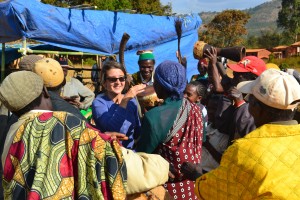
Lugarawa, Tanzania (2015)

Irina: I arrived in Tanzania at the end of February 2015 and immediately after I have started my collaboration with a local foundation. I live in a small village (of about 2000 people) in the Southern-Highlands of Tanzania, not far from the border with Malawi, in a very fertile and picturesque area, but where the majority of people live beneath the poverty line and the population is heavily dependent on subsistence farming and various forms of aid. It is my first time in Africa and I am so lucky to live this experience in this village. I have decided to work with the foundation because I understood from my first meeting with the team that they are different. The motivation for doing something for their community and for contributing to the development of their region, was originating from their hearts and not from a foreign impulse or from a personal financial desire.

They are all volunteers and they did all their projects with very little financial support. The team is made mainly of doctors, teachers and business owners. It is a small team but, due to their energy and dedication, together we managed to achieve a lot in a very short time.

As Program Officer, I take care (among other things) of launching and coordinating new projects, of managing fund-raising actions, of planning new strategies and of changing the image of the foundation. Some of the projects we did in the past months included activities related to: 1) childrens rights; 2) respecting and protecting the environement; 3) prevention of conflicts; 4) identification of young leaders in the community; 5) supporting small business ideas; 6) identification of causes for poor performance in schools.

We did also a lot of meetings with local villagers, with students and local leaders during which we discussed also about asylum and refugees. We did this mainly because of two reasons: 1) Tanzania started receiving new asylum seekers coming from Burundi, due to the civil unrest related to the latest Burundian Presidential elections and 2) Tanzania has been preparing for national elections which will take place towards the end of October 2015. During our discussions we emphasised the fact that Tanzania is the most peaceful country in the region (and has been like this since its independence in the ’60s) and the only way for this country to remain like this is for its inhabitants to continue living peacefully in diversity and to contiue working assidously on preventing conflicts.

Apart of the above mentioned activities, we have recently organized a festival, which involved the communities from three villages. The festival had several components, including: 1) awareness about protecting the environment (in special the de-forestation of the mountains and the impact on the water sources in the area); 2) to re-connect those born in the area and who migrated to other destinations with their home communities; 3) the development of a ethno-historical research about the region; and 4) “planting the seeds” for the construction of a community center (where locals could have a library, could take various courses, could make cultural meetings).

The work that I currently do is not related to managing migration, however, it has provided me with an insight into the importance of migration at a micro level. For example, I understand better now the necessity of migration for personal socio-economic development (mainly related to access to education and labor market mobility) and the restrictions that potential migrants meet due to limited resources, high costs and lack of a network for information and experience exchange. And, yet another time, I am experiencing the life of a migrant. I am learning a new language, I am discovering a new culture and the most important, I understand much better what are the best ways of working efficiently in international development projects.



We are Together for Development

Together for Development is a grassroots initiative founded in 2012 in Washington DC by a group of young professionals (economists, diplomats, lawyers, engineers, etc.) who aimed to come up with a different approach and development aid design.

This is a very frank interview with Alexandru Ciorobea, the founder and CEO of Together for Development.

Alexandra:  Alex, how would you describe the concept behind Together for development?

CaptureAlexandru Ciorobea: I would describe it as a down to earth alternative to dealing with poverty and aid-dependency in small communities who have a lucrative business idea, but zero access to capital, information or other resources. Together is about addressing poverty through targeted, measurable and accountable economic empowerment. What does that mean? Actually unnamed (2)it’s pretty simple: you cannot be serious about poverty and social development as long as you do not go down to their root causes. Among the worst of which is the lack of access to information about existing opportunities, corroborated with a chronic lack of access to the capital needed to generate development and growth.

Our aim is simple: deal with poverty one community at a time, with clear timelines, objectives and benchmarks. We don’t discuss politics, we don’t advertise and definitely don’t spend resources juggling truisms about development, human rights and such. There are plenty others who are already doing a fantastic job on that department. We deal instead with concrete projects that translate into small businesses that translate on their turn into steady incomes for the respective communities that further translate into better living conditions and in the end, in saying that those communities are no longer poor or aid-dependent. Simple as that.

Alexandra: Over the last 25 years, the number of donors, non-governmental organizations, foundations, corporations, charities and other stakeholders interested in bringing a change in poor communities living with 1.25 or 2 dollars per day in Africa and South Asia has grown enormously. Nevertheless, despite the fact that recent poverty estimates show a notable decline in extreme poverty, serious criticisms is very often attached to the aid industry.

As a former UN expert and diplomat, how would you assess the progress made by international institutions, civil society and governments in tackling extreme poverty and achieving the MDGs?

Alexandru Ciorobea:  First of, in order to “assess the progress” of something – anything, for that matter – we need to make sure that we have enough reliable referential data and performance indicators available, against which we should compare our “progress”.

On this particular topic – the “progress of the MDG’s” – there are two approaches: the official, “correct” and almost non-debatable one, widely advertised all over the mainstream media who wouldn’t dare to say anything against the morality powerhouse which is the UN; and then, the “hush-hush” version, whispered from behind the scenes, usually over a lousy coffee in the UN cafeterias. The latter category rarely sees the print or make it into the mainstream. A notable exception was the “Oil For Food” scandal, from which Kofi Annan, the artisan of the Millennium Declaration came out pretty wrinkled.

However, on the topic at hand, at least at this point, nobody in their right mind would risk his/her career and credibility by whistling in the church of multilateralism and by criticizing the excellent work carried out behind closed-doors by so many honorable experts. I can say that, because I myself was once one of those “experts” wasting long sleepless nights fighting over the placement of comas in some obscure non-compulsory resolutions or fighting over the most benign synonyms to replace anything that sounded remotely compulsory, in scores of toothless resolutions.

Well, just to give a little context to what I’ve just said – I expect to have raised at least a couple of eyebrows by now.

How did the MDGs come into being? In the late 90s, Kofi Annan was looking to find a way to keep development and poverty eradication on the agenda at a time when the interest on global issues seemed to be waning, while the international image of the UN was still severely bruised after the Rwandan and Bosnian fiascos. He came up with the Millennium Declaration – something befitting the symbolism of the year 2000 and in the meantime something that could be universally accepted as “good and righteous”, channeling the energies of the international community in a more positive direction, away from the peacekeeping resounding failures. It was a striking document defining a set of shared values and commitments to a range of goals, collected from previously agreed outcome documents adopted in various international summits. Lacking the force of international law or the enforcement mechanisms of international treaties, Annan and his colleagues needed a way to maintain political and financial support for what came to be known as the “world’s biggest promise.”

Right from the outset, the MDGs came with serious design flaws. However, these flaws were perfectly understandable considering the haste with which the goals were agreed upon and collated in the backrooms of the UN by a small number of high level bureaucrats from a handful of multilateral organizations.

As a result of the somewhat undemocratic and opaque process by which the MDGs were drafted, the goals and targets were somewhat sketchy and their flaws became quickly apparent to the people on the field who needed to translate them into actual reality…

Concretely, let’s look a little bit against what benchmarks we were expected to evaluate the progress made in 15 years:

– For many of the targets, reliable data collection simply did not exist or was of poor quality, or its insufficient coverage made it irrelevant for any serious statistical analysis. You can imagine that this was the case with many African, Central American and even Asian states in which data collection was very difficult, unreliable or just impossible, considering the local sources and the objective contexts in which it took place… Just think of all the countries that were affected by raging civil wars or were engaged in military conflicts during the 90s and the 2000s… How would you collect accurate data from there and even more so, against what data would you assess their progress later on? Furthermore, by backdating the benchmarks of the goals to 1990 – yes, the goals and specific targets were decided upon and designed in 2000, but the referential thresholds were backdated with a whole decade – the challenge of data collection was made worse, even if we are to admit just that the quality of statistical data available was worse in 1990 than in 2000.

– Even the indicators for which data collection was more reliable were highly suspect. For example, the World Bank’s “International Poverty Line” that was set at $1.25 according to 2005 purchasing power parity per day (the PPP) was set by an unsubstantiated method – it was widely criticized by expert economists ever since – as it was based on random purchasing power conversions, while also being highly dependent on the base year selected for converting the domestic currency into US dollars… Only think that the purchasing power of $1.25 in 1990 was dramatically different from that of 2000 and even more so, of that of 2015 after you factor in the inflation, a severe and prolonged world economic crisis and spiking prices for essential goods. So, yes, according to the $1.25 benchmark the statistics look definitely better, however, the reality on the ground tells a different story considering the small adjustment details just mentioned. Concretely, if 25 years ago a Cameroonian family of four could fare reasonably well with a combined revenue of $75 per month, at the 1990s PPP levels, well, I can assure you that the same is definitely not possible in 2015 when the prices have gone wild especially in import dependent economies, additionally plagued by irresponsibly high import tariffs for everything you can think of…

– Furthermore, by selecting targets that disregarded a country’s starting point on all relevant fields, their available resources or capacity to implement structural reforms, the assessment of the MDGs, at national level, made it almost impossible for the worst off countries in the list to be successful. For example, consider a country that had to cut poverty by half. If we consider that 20% of the population lives under the poverty line, then 10% of the population was expected to make it above the $1.25/day threshold in a 15 year period. This would be reasonably manageable, considering that the starting point was not so steep to start with. But for a country with a poverty rate of 60%, the challenge is obviously completely different, as it needs to cut poverty by 30% of the total population in the same 15 years, while starting from the premise that the latter country would obviously be marred with more complicated challenges than the former, while having far fewer resources at its disposal. Also, nobody took into account the demographic increase of the countries most affected by the issues considered under the MDGs.

– And now one of my “favorite” objections: many of the indicators used to measure progress were revised during the MDG process. For example, one of the most recent ones to be revisef was the indicator for measuring progress against chronical malnutrition. When do you think this happened? Five year into the process, or maybe eight? No, it happened in 2012, in the 22nd year of the referential period, when FAO leisurely presented „a new and improved” methodology for counting the chronically undernourished. In essence, what this „new” methodology did, was no less than to change the very definition of chronic undernourishment according to which a steadily rising number of people affected by hunger was turned into a steadily falling trend-line. Moreover, this new definition completely disregards a tiny little detail that would have mixed-up the numbers: during the economic crisis, between 2008-2012 there was a dramatic increase in world food prices that affected especially the people living in those countries that were expected to make the longest leaps… In fact, what FAO is telling us – with the approval of its own Executive Board and that of ECOSOC – is that according to its new, innovative method to do the counting, the number of 1 billion people malnourished from 1990 has actually fallen to „just” 800 mil., conveniently forgetting that in 2009 it reported that the number of malnourished people – according to its own old criteria! – had broken the ceiling of 1 billion, for the first time in human history.

Essentially it’s about changing the rules during the game if you’re not too comfy with the performance of your favorite team. This way of cosmetizing inconvenient truths is neither new, nor original. It’s widely used by PR companies that are paid top dollar to make their clients look good for their investors. Unfortunately, in the case of the MDGs, the impact of these “adjustments” or “revisions” was to alter the perception regarding the progress made towards objectives that were too important to miss. However, even with these funny tricks, the discrepancies between the desired results and the realities on the ground were so steep that no auditor would have agreed to push the scalpel any further, even for the sake of the greater good.

– Lastly – and with this I promise I will end my list of personal reservations: no serious discussion was carried out regarding 1. the mechanisms by which these goals were to be achieved and 2. how states and international organizations would be held accountable for their failure to deliver on their commitments to uphold the MDGs.

However, in spite of all my objections – stemming from what I gathered during my work with those directly concerned by the success or failure of the MDGs and also by taking part directly to the mechanics behind the drafting of such goals – certain progresses have undoubtedly been achieved. But all these progresses were made possible, and are the most apparent, in those states in which the local authorities proved real commitment to the greater good of their people rather than keeping with the consecrated formula “rip the benefits as long as you have the power”. I’m thinking of the likes of Rwanda, Botswana, Ghana, Ethiopia, Egypt, Vietnam, the Philippines, Cambodia, Sri Lanka etc. Of course, there are many caveats regarding those indicators that are not included among the MDGs, such as the progress toward a viable rule of law, respect for human rights, fight against corruption, democratization, environmental protection etc.

In conclusion, regardless of the specifics and of all the bickering around whether the MDGs were effective or not, the very fact that now we have expanded the conversation and the member states of the UN have hit the “refresh” button by adopting the SDGs is a clear indicator that the will is there and that the remaining problems are duly acknowledged. The most important achievement of the MDGs, in my opinion, besides the actual improvements on the ground, is that the conversation is still open and that the international community has stepped up its pledges towards a much more comprehensive development agenda.

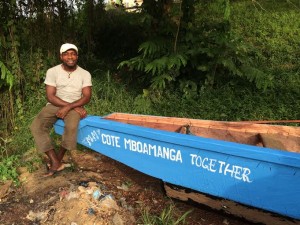
Alexandra: I heard about your work at Together for Development from the ad of the crowdfunding campaign “Project Kribi- Time to Make a Difference’’ that aimed to empower a small fishing community  of 200 people from Kribi (Cameroon). The organization’s approach, probably based on the oft-quoted saying Give a man a fish and you will feed him for a day. Teach him how to fish and you will feed him for a lifetime, was to create a sustainable business model equipping fishermen with necessary fishing tools and helping them store/ transport/ sell their fish products on other markets than the local one in Kribi oversaturated with same products.

Alex, how would you describe your activity as a development worker within the MDGs framework?

Alexandru Ciorobea:  Quite easy: our projects, at a micro-scale, aim to meet all 8 goals and many of the targets of the SDGs, not in 15 years, but in 3. For example, with our first project in Cameroon, “Project Kribi”, by setting up a lucrative cooperative in a small, homogenous community, in only 6 months of activity we achieved the following:

  • The daily average income per capita for all the active members of the cooperative is currently at $9, compared to $2.3, as it was before our collaboration;
  • Obviously nobody is going to bed hungry anymore in our community;
  • Several women in the community are now involved in the administration of the cooperative and they can now keep away from taking up risky activities;
  • All children in the community attend school and benefit from medical assistance;
  • There was no case of child or maternal death since we started the project and considering that our members can now afford quality medical services, this is not a matter of concern anymore;
  • HIV/AIDS is not an issue in our community;
  • Currently all households have access to safe drinking water.

Furthermore, encouraged by the results of this project, we are just about to start a new one this month, into a larger community from the central region of Cameroon. This new project is focused on agricultural development and ecological sustainability. You can say that this new project is an upscaling of the previous one, with a wider demographic impact.

Plus, and perhaps most importantly, considering that our projects have clear deadlines and terms of completion – including even terms to define their failure – we definitely stand against perpetuating the lucrative policy of aid-dependency.

So, I guess you could say that by implementing the concept of Together we are trying to play our tiny role in bringing the MDGs and now the SDGs closer to their intended targets. As I was saying: making a difference one community at a time.

Alexandra: The UN Summit for the Adoption of the Post-2015 Development Agenda is taking place these days at the UN HQ in NYC. We seem to have everything in the new 17 goals and their 169 targets. Nevertheless, as you have could experience yourself in your work, what matters at the end of each and every day are concrete results: kids in schools, drinking water delivered in all homes around the world, rural electrification, law enforcement in violence-prone areas, sustainable businesses, less aid dependency,  and the list can go on forever.

What are your hopes and fears regarding the SDGs?

How do you think the new post-development agenda will restructure the development work in the next 15 years in order to make better happen? 

Alexandru Ciorobea: These are tough questions. The first: after the experience of the MDGs and based on my own conclusions since I started working outside the very protective umbrella of the „official capacity”, I could say that my hopes became also my fears. After you go through several reality checks along the way, you come to realize that when your hopes meet with a very unpredictable reality, it is only natural for fear to kick in. That’s how you turn a tad more pragmatic in dealing with your ideals… This also leads to better defining your goals, starting from what you know that could realistically be achieved, rather than what you wish for.

For instance, I fear that the SDGs not only that will replicate the pitfalls of the MDGs, but judging by the scale of their ambition, will multiply and diversify them. The SDGs, in my opinion, propose a too idealistic vision on the true potential for positive change of our increasingly unpredictable geopolitical reality. Think only of the unforeseen events that happened in the past 6 months around the world, many of them with long-term social and economic consequences that were not factored into the grand development scheme of the SDGs. In our interconnected world, where the shockwaves of conflicts and instability spread like wildfire, it is simply unrealistic to set minute targets without considering the specificities of each country or region in which those particular targets are expected to be implemented.

In the current collection of goals and targets, a sort of MDGs v2.1 (promising more bug-fixes while claiming dramatically more resources from an aging computer), I’m afraid that many of the world’s intractable development problems are not addressed. And they could not possibly be addressed, considering that, at the end of the day, like any other document negotiated and adopted by states with different and oftentimes diverging agendas, it is an intensely politicized material. It is the lowest common denominator that could have been agreed by 193 negotiators, each with his own agenda.

Just to zoom out a little bit to get some perspective: the SDGs not only that aim to put an end to global poverty and deal with environmental crisis while ensuring universal respect for human rights, but they intend to do all that everywhere by 2030!

Now, let’s take a closer look at our reasons to worry – I wouldn’t recommend using “fear” at this point, as it would be a bit premature. However, let’s see:

– Same as the MDGs, the SDGs include goals and targets for which there are no reliable data available, nor could they be available in the foreseeable future. For example, target 2.5 tells us that by 2020 the world should “maintain genetic diversity of seeds, cultivated plants, farmed and domesticated animals and their related wild species (…) at national, regional and international levels (…)”. As far as I know, there are no quantitative indicators against which the development actors (individual states or international agencies) can be judged on this target.

– The SDGs recycle indicators that were known to be deeply flawed from the MDGs’ evaluation experience. For example, the global poverty eradication target continues to be $1.25, at the same old 2005 PPP level. I guess nothing better could be agreed upon…

– The SDGs keep the same arbitrary way of deciding on the desirable rate of progress. For example, under Goal 3, maternal mortality is to be cut to 70 per 100,000 births, and child mortality is to be eliminated altogether, same as AIDS, tuberculosis and malaria, while hepatitis, water borne diseases and other communicable diseases are to be just “combated”. Premature mortality from non-communicable diseases is to be cut by 1/3, while road accidents are to be cut by 1/2. Who came up with these numbers and on what criteria? Was there a serious assessment regarding the attainability of these targets within the next 15 years? And come on, how will we exterminate all African malaria-carrying mosquitoes by 2030 without using chemical insecticides? Or maybe mosquitoes-nets will prove more effective than ever before, or perhaps some miraculous vaccine is in the pipeline to be patented and I don’t know about it.

– Other SDGs are just too simplistic and naïve to be taken seriously by any experienced development practitioner. For example, target 1.4 of the poverty eradication goal includes, no more and no less than a “guarantee” that everyone should have access to microfinance, despite the fact that the best available evidence suggests that microfinance did not prove to be the effective tool for combating poverty as it was originally advertised. Goal number 4, on education, refers to life-long learning opportunities for all. Again, as any expert on education from UNICEF knows all too well, while this is a desirable goal, it is hardly one that should be prioritized over more immediate gaps to be filled, such as: increasing the number of professional educators; reducing the number of students per educator; increasing access to schools in order to improve attendance; design new and more competitive curricula; or to increase family income as to allow for the parents to keep their children in school.

And these are just a few examples that I quickly picked them from the notes I made when preparing an op-ed on the topic of the SDGs.

However, if we are to judge by what happened with the MDGs, we can expect fifteen years of high-level pleads for “more political commitment”, for “pledging more resources” towards an unprecedented success that would only be missed if the largest contributors will not gradually scale up their financial contributions while the recipients will have to “increase their political commitments” (please read: “make more imaginative promises of reform and democratization”, in most cases).

I also expect no change in the optimistic way in which we will be presented the progress towards the achievement of the goals and targets – optimistic enough, but not too much, as to discourage increased amounts of financial support from generous donors. We should never forget that the international agencies, the ones holding the monopoly over what reaches the public eye, are funded and controlled by governments. What does that mean? Well, it means that those who are in power in those governments or governing structures will never be willing to look as if they failed in such an honorable endeavor. They will want to project success and their mandates to be associated with some achievements on such a global scale.

I’m sorry, but after living amidst real people in the developing world and getting to know, first hand, their real problems, beyond any convenient rhetoric for the eyes or ears of the general public, I can’t show a better brand of optimism. But again, this is just me and nothing should be taken face value. That is exactly why I’m encouraging all those interested in real-life development, to go on the ground, to engage in real fieldwork and experience reality for themselves, through the filter of their own principles and ideals. Development and human rights simply cannot be done from classrooms and textbooks, from conference halls or from 5 stars hotels. Development should happen on the ground, not on paper, in charts or in power point presentations.

However, regardless of what may or may not happen, the SDGs, same as the MDGs, are somehow like an experimental vaccine: they may work, or they may not, but no harm can be done by trying.

Alexandra: Together for development is an organization that seems very close to the principle of subsidiarity, setting goals at the most appropriate level in the communities where you carry on your projects.

Who are the communities you work with? 

Could you tell us more about the current/ future projects you work on at Together?

IMG_2262Alexandru Ciorobea: Currently, we work in Cameroon with 2 different communities. One is a community of fishermen in Kribi, right on the Atlantic coast, where we have set up a sustainable commercial fishery and a fish-distribution operation, while the other is located deep into a remote area from the central region. The latter is an agrarian community that due to its geographic isolation and lack of access to most resources had to diversify and develop by itself. What made us interested in them was their proven capacity to work together and thrive despite unimaginable adversities and without absolutely any help from the local authorities. This second project is much larger in scale and more diversified than the fishery. If successful, we will prove that the development model proposed by Together can be implemented and generate results even in the most remote and geographically challenged communities.

The third project in Cameroon is focused on the empowerment of women. Essentially, we plan to develop an all-women cooperative that is harvesting and processing a traditional local plant called Allanblackia Floribunda. Most of these women were victims of various forms of abuses and were outcast by their conservative communities of origin. Their only chance for a better and dignified life is to develop their own income generating activity. So, in a nutshell, Together intends to provide these women with all the necessary technology that would enable them to increase their productivity, the quality of their products and to expand their presence on the local markets.

 However, the dearest and clpicture in action bee-farmosest to my heart is the project that we have developed in Romania, as the pilot project of Together, back in the spring of 2013, when we were trying to test the concept in the real world. There we developed a fully organic and carbon neutral bee-farm. The project is now in its last year of development. That means that according to our agreement, our collaboration with them will end in May 2016. At that point, according to the financial indicators, the project will be self-sustainable and set on a growing trend. You can find more about it from our website and also anyone interested can order honey, pollen and a wide range of apicultural byproducts directly from their website: www.mellydor.ro.

 In perspective, once the bee-farm project will be over next year, we intend to start another project in Romania, most probably in the field of social responsibility and civic education focused on young people from disadvantaged communities.

Alexandra: The name of your organization – Together for development – seems to catch the idea of #SDG17 (Partnership for the Goals). Is the idea of partnership for development sufficiently shared amongst decision makers, CS workers and final beneficiaries (i.e. communities in need)?

CaptureAlexandru Ciorobea:  As I was excessively long on all my other answers I will be brief on this one. About decision makers, the problem is not that they wouldn’t be aware of what needs to be done. At that level, the problem is a bit more cynical than that. It’s all about political benefits. If a certain project presents immediate political or image capital, then it is likely that it will draw the necessary attention and maybe the support of the “decision makers”, otherwise it’s either shelved or left for the idealist activists… With the CS workers, honestly I didn’t have enough contacts as to form an opinion one way or another.

However, at the level of the beneficiaries, there can be a real challenge. The idea of “partnership” and mutual obligations, of deadlines and quantitative targets is initially difficult to grasp. It takes time, patience and perseverance to create the premises for developing a project that would stand a decent chance to come out on the green after the first year… This is not only applicable in countries where one would expect that cultural differences may be the main impediments, but also closer to home.

Believe me, it took us some many long, unsuccessful hours to try to explain to some communities in Romania that the modern cooperatives that proved successful in many other EU countries – especially from Central Europe, such as Czech Republic, Slovakia, Austria or Poland – have nothing to do with the cooperatives from the communist time. We were met with a high level of reticence and we came to understand that some people simply cannot grasp how someone would just wish to help them develop their own businesses without giving them money but just means of production and counseling. Moreover, very few of them seemed to understand and to be willing to accept the rigors of a business-plan, with clear deadlines and assessable growth and productivity targets. Well, the problems are more complex on this department and this could easily make the topic of a different conversation some other time.

*unnamed (3)

With a very rich academic background (holding a BA degree in Management and Administrative Studies from Bucharest Academy of Economic Studies (Romania), an MA degree in Anglophone Studies from Metropolitan University (Czech Republic) and being a graduate of George C. Marshall European Center for Security Studies, (Germany), Alexandru Ciorobea became a career diplomat with the Ministry of Foreign Affairs (MFA) of Romania (2004-2012).

Posted in NYC with the Permanent Mission of Romania to the United Nations, between 2007-2012 he negotiated, on behalf of the European Union, several General Assembly resolutions on Human Rights and development. His main fields of expertise are Human Rights, humanitarian affairs, social and economic development. In December 2012, after he left the MFA, he established Together for Development in Washington D.C., which is an American non-profit organization aiming to promote a new model of implementing economic and social development projects.

*

The views expressed in this article are solely the property of their author and do not represent under any circumstances the official position of any international organization.